Three names dominate the starter section of an Indo-Chinese menu, Manchurian, Chilli, and 65, and they are often treated as interchangeable even though each is cooked differently and tastes different on the plate. For anyone searching for gobi manchurian in Cumming, GA, knowing which is which makes it much easier to order what you actually want. You can see how the full range looks on the menu at Bhimas Pure Veg, where each of the three comes in several vegetable versions.
What Is the Difference Between Manchurian, Chilli, and 65?
Manchurian is battered, fried vegetable tossed in a thick, glossy soy and garlic sauce. Chilli is fried vegetable stir-fried with onions, bell peppers, and green chilies in a sharper sauce. 65 is spice-marinated and fried with curry leaves and no sauce at all, so it tastes drier and more South Indian than Chinese.
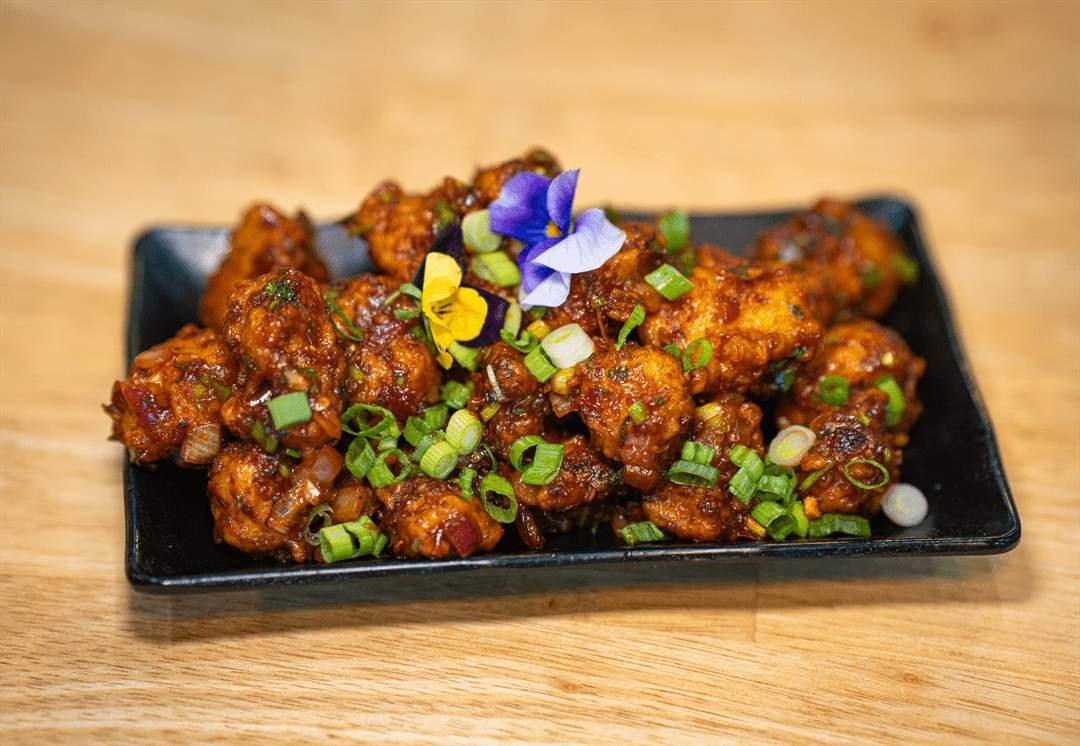
The easiest way to tell them apart is to look at the plate. A Manchurian is sauce-coated and shiny. A chilli dish shows visible pieces of onion and pepper and leans harder on chili. A 65 has no sauce, which is why the menu marks these as dry. That is also why the difference between Manchurian and chilli shows up first in appearance, while the difference between either of them and 65 shows up first in aroma, since 65 typically carries the smell of fried curry leaves and green chilies.
Does the Vegetable Change the Dish?
Yes, and quite a lot. Gobi is the Hindi word for cauliflower, and its florets are the traditional base because the rough, branching surface holds batter and sauce well, leaving soft centers under a crisp coating. Paneer Manchurian and paneer 65 use a dense, milky cheese that stays firm when fried and turns out richer than the vegetable versions. Mushroom Manchurian gives a juicier, earthier bite, since mushrooms release moisture as they cook, and baby corn brings a sweeter crunch that holds its texture longer.
Bhimas lists the same three styles across gobi, paneer, mushroom, and baby corn, along with Veg Manchurian. That makes it easy to order one style in two vegetables or one vegetable in two styles and taste the difference directly.
Why Is 65 Not Really an Indo-Chinese Dish?
The 65 style is South Indian, not Chinese. It is most often traced to Chennai, where the original chicken version became a fried-snack staple, and the name has several competing explanations that nobody has settled. The cooking is different too: the pieces are typically marinated in spices such as red chili, ginger, and garlic, fried, and finished with curry leaves and green chilies rather than tossed in a soy-based sauce.
That is why gobi 65 tastes more like a South Indian fry than like a Manchurian, and why it sits comfortably next to a meal built around dosa or rice, not only noodles. The 65 items at Bhimas are listed as dry, with gobi, paneer, mushroom, and baby corn versions.
The Bhimas Special Versions Worth Asking About
Beyond the standard lines, the menu has a Bhimas Special starter section with its own versions: the 555 series (555 Gobi, 555 Paneer, 555 Mushroom, and 555 Baby Corn), a Pachimirchi series, a Cashew 65 series, and Chatpata Crispy Corn. Pachimirchi translates to green chili, which hints at the flavor direction, but the names do not spell out how each is prepared, so it is worth asking before ordering if a particular heat level or ingredient matters.
These are the items most likely to differ from a version you have had elsewhere, which makes them the most interesting to try once the standard styles feel familiar.
What Should First-Time Visitors Order?
A first-time visitor should start with Gobi Manchurian, the baseline for the sauce-coated style, and add Gobi 65 to taste the dry, spiced style beside it. Ordering the same vegetable two ways makes the difference between sauce and spice obvious on the first bite.
Looking through the starters menu before ordering shows how many vegetable and style combinations are available, which helps when the table cannot agree on one.
Best Picks for Spice Lovers, Paneer Fans, and Groups
Spice lovers: Chilli gobi and the chilli paneer and chilli mushroom versions lean hardest on green chili, and the Pachimirchi starters are worth asking about for the same reason.
Paneer fans: Paneer Manchurian, chilli paneer, and paneer 65 give the same three styles with a richer, firmer bite.
Groups: Order one sauce-coated starter and one dry starter, such as Gobi Manchurian and Gobi 65, so the table can compare the two directly.
Something unexpected: Even idly gets the treatment, with Idly Manchurian and Chilli Idly on the menu.
Why Gobi Manchurian in Cumming, GA Works as a Shared Starter
A starter plate suits shared dining, which is how many group meals are ordered: one or two plates first, then mains. Fried starters are easy to split and compare, and the range of vegetables and styles lets a table order two or three without repeating the same flavor.
Pairing a starter with a rice or noodle dish turns it into a full meal, and the menu includes fried rice and noodles for that purpose. For people new to the cuisine, starters are also the lowest-commitment way to try it, since a single plate shows the style without requiring a full order.
Frequently Asked Questions
Gobi is the Hindi word for cauliflower. Gobi manchurian is cauliflower florets coated in a batter, deep-fried until crisp, then tossed in a sauce typically built from soy, garlic, ginger, and chili. The contrast between the crisp coating and the glossy sauce is the point of the dish, which is why it is best eaten soon after it is made.
No. Gobi 65 is marinated in spices and fried, then finished with curry leaves and green chilies, with no sauce, so it is dry and sharply seasoned. Gobi manchurian is battered, fried, and tossed in a soy-based sauce, so it is glossier and saucier. The two come from different traditions, South Indian and Indo-Chinese.
Paneer versions are the more filling option, since paneer is a dense, milky cheese that holds up to frying and takes on sauce well. The menu offers paneer Manchurian, chilli paneer, and paneer 65, so the same three styles are available. Mushroom and baby corn versions offer a juicier or crunchier bite instead of a richer one.
Yes, you can order online for pickup at the Cumming location, where the current starters are listed. Fried starters are at their crispest right after cooking, so ordering close to your pickup time helps, and eating them soon after you collect them keeps the coating from softening in the container as steam builds up.
Who Gets the Most From Ordering Starters Side by Side
Ordering starters side by side suits people who like comparing, and it suits newcomers who would rather learn a menu by tasting it than by reading it. Once the sauce, the chili, and the spiced fry are clear in your mind, the long list of starters stops looking like repetition and starts looking like a map of choices. For questions about the Cumming location, you can contact Bhimas directly.